
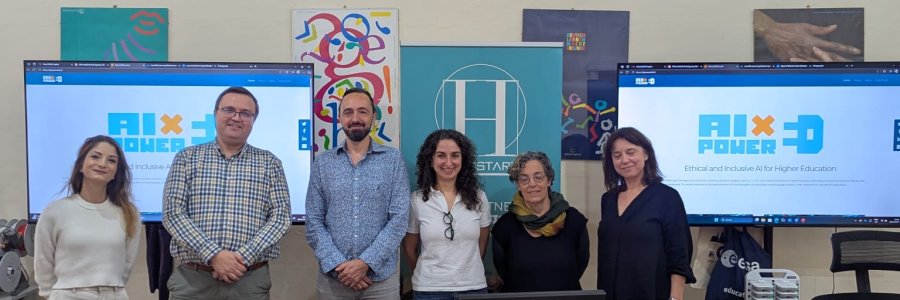
AI-PowerED Kick-off Meeting
Valletta, Malta — 18 November 2025
The AI-PowerED consortium formally launched its Erasmus+ KA220-HED cooperation partnership with a one-day kick-off hosted by the Headstart Technology in Valletta, Malta. Colleagues from Universität Duisburg-Essen (UDE), the National and Kapodistrian University of Athens (NKUA) and University of Malta met on site to confirm the project’s governance, common work plan and first-year priorities.
Purpose and framing
The meeting established shared procedures for coordination, communication and quality assurance, and revisited objectives and indicators for impact. Partners aligned on the timetable for activities and events in Year 1, ensuring clear responsibilities and a realistic sequencing of tasks across the consortium.
Work package highlights
- WP1 – Project Management (UM). Finalised decision-making structures, reporting cadence and risk/quality monitoring arrangements.
- WP2 – Needs & Context Analysis (UDE). Agreed methodology to map AI use in higher education, including stakeholder surveys and focus groups, and to produce an ethical and inclusive framework to guide subsequent work.
- WP3 – Co-design, Toolbox & Online Course (NKUA, with UM platform development). Confirmed a programme of participatory workshops that will inform a digital handbook, open educational resources and a modular online course hosted on the AI-PowerED platform.
- WP4 – Training, Pilots & Evaluation (Headstart). Outlined training pathways and pilot implementations across partner sites, followed by a comparative evaluation and policy-relevant findings.
- WP5 – Communication, Dissemination & Sustainability (UM). Set the plan for outreach, stakeholder engagement, translations, and long-term exploitation of results.
Key outcomes
- Governance launched: roles, committees and communication channels activated.
- Year-1 plan agreed: milestones, deliverables and indicators validated against the project proposal and Gantt.
- Methods approved: instruments for WP2 data collection and a co-design framework for WP3.
- Capacity-building roadmap: schedule for workshops, pilots and evaluation under WP4.
- Visibility actions: editorial calendar for website and social media, with consistent Erasmus+ acknowledgements.
Next steps
• Initiate WP2 mapping activities and ethics procedures. • Schedule the first series of WP3 co-design workshops and begin development of the online course environment. • Confirm dates and venues for training and pilots under WP4. • Maintain regular management and quality-assurance reviews through WP1, and implement the dissemination plan under WP5.
AI-PowerED is co-funded by the European Union. Views and opinions expressed are those of the authors only and do not necessarily reflect those of the European Union or the European Education and Culture Executive Agency (EACEA). Neither the European Union nor EACEA can be held responsible for them.